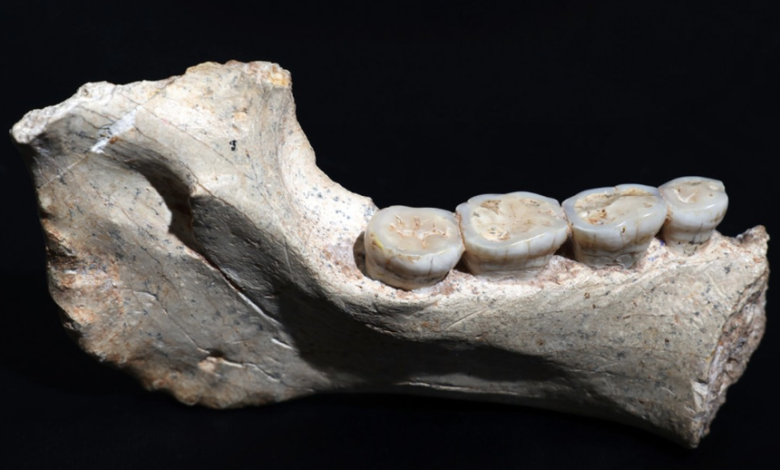
In northern Egypt, researchers uncovered fossil remains dating back around 18 million years in the Wadi Moghra area. These remains were identified as a new species named Masripithecus moghraensis. Although the fossils are limited to teeth and parts of a jaw, they are considered highly significant for studying early primate evolution.
Based on dental structure analysis, scientists suggest this species may be close to the last common ancestor of modern hominoids, including chimpanzees, gorillas, orangutans, and humans. The findings, published in the scientific journal Science, also challenge the long-held idea that great apes originated exclusively in East Africa, proposing instead that North Africa and possibly the Arabian region could have played a key role.
Teeth are crucial in paleontology because they fossilize well and preserve detailed biological information. However, some researchers stress that additional fossil discoveries are needed before confirming these conclusions.