Did You Know the Sahara Was Once Green?
Today, the Sahara is the largest hot desert in the world. But thousands of years ago, some parts of it were much greener!

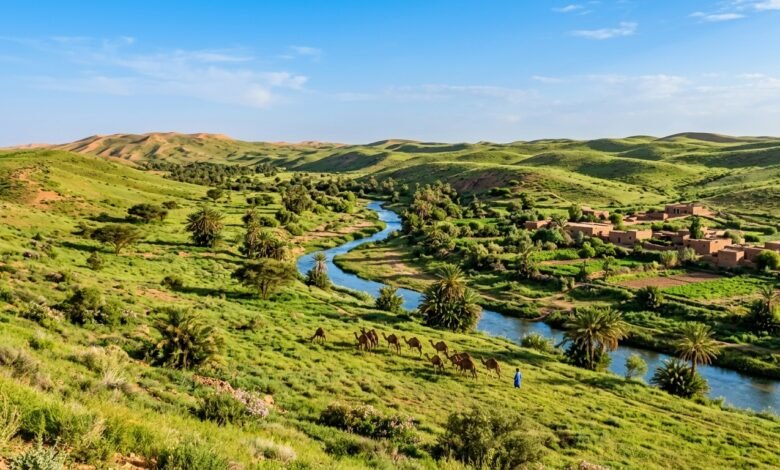
There were lakes, rivers, grass and trees. Animals such as hippos, elephants and giraffes lived in some areas. People lived there too.
But why did the Sahara become so dry?
Around 11,000 years ago, the climate in parts of Africa was much wetter. Scientists call this period the African Humid Period.
Back then, the Earth received sunlight differently depending on the season. Very slow changes in the Earth’s orbit and the tilt of its axis made summers in the Northern Hemisphere sunnier. This helped strengthen the African monsoon, which brought more rain to the Sahara.
But over thousands of years, these conditions changed. The monsoon rains became weaker, and lakes gradually shrank. Plants became less common, the land grew drier, and the desert expanded.
This did not happen overnight. It took place gradually, although some changes happened more quickly than others.
How do we know the Sahara was once greener?
Scientists study ancient lake beds, sediments, fossils, and paintings and engravings on rocks. These pictures show animals and scenes from everyday life. They tell us that people once lived in landscapes very different from the Sahara we know today.
These drawings are like very old messages left on stones. They tell us about a time when the Sahara was much wetter.
So, just because the Sahara is a desert today does not mean it has always been one! The Earth’s climate changes over time, and the Sahara is one of the most amazing examples of this.