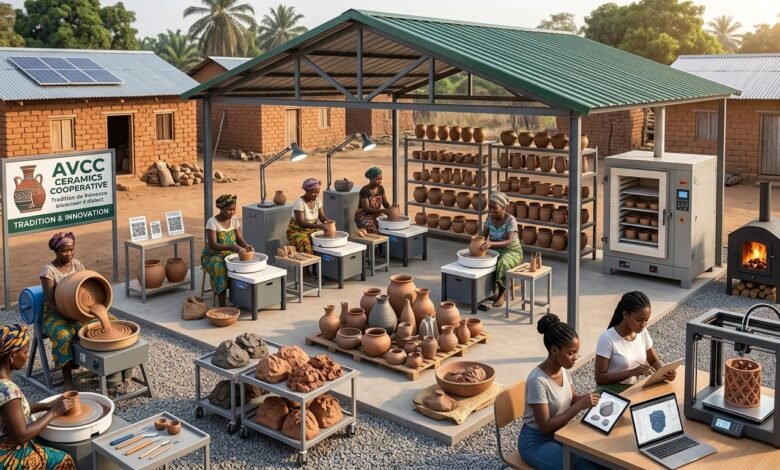
In this village in the Mono Department, pottery has long been part of everyday life.
The women use clay collected from the surrounding area. It is dried, crushed and mixed with water before being shaped into pots, jars, cooking vessels and sculptures.
Some potters learned the craft as children by watching their mothers at work.
Solange Akakpo, a member of the Akpénin Mahou association of women potters, explains that the skill was passed down to them by their mothers.
Pottery is therefore more than a profession. It is also a way to preserve family history and cultural heritage.
At a time when many objects are mass-produced, these artisans show how a simple piece of clay can also tell the story of a community.

